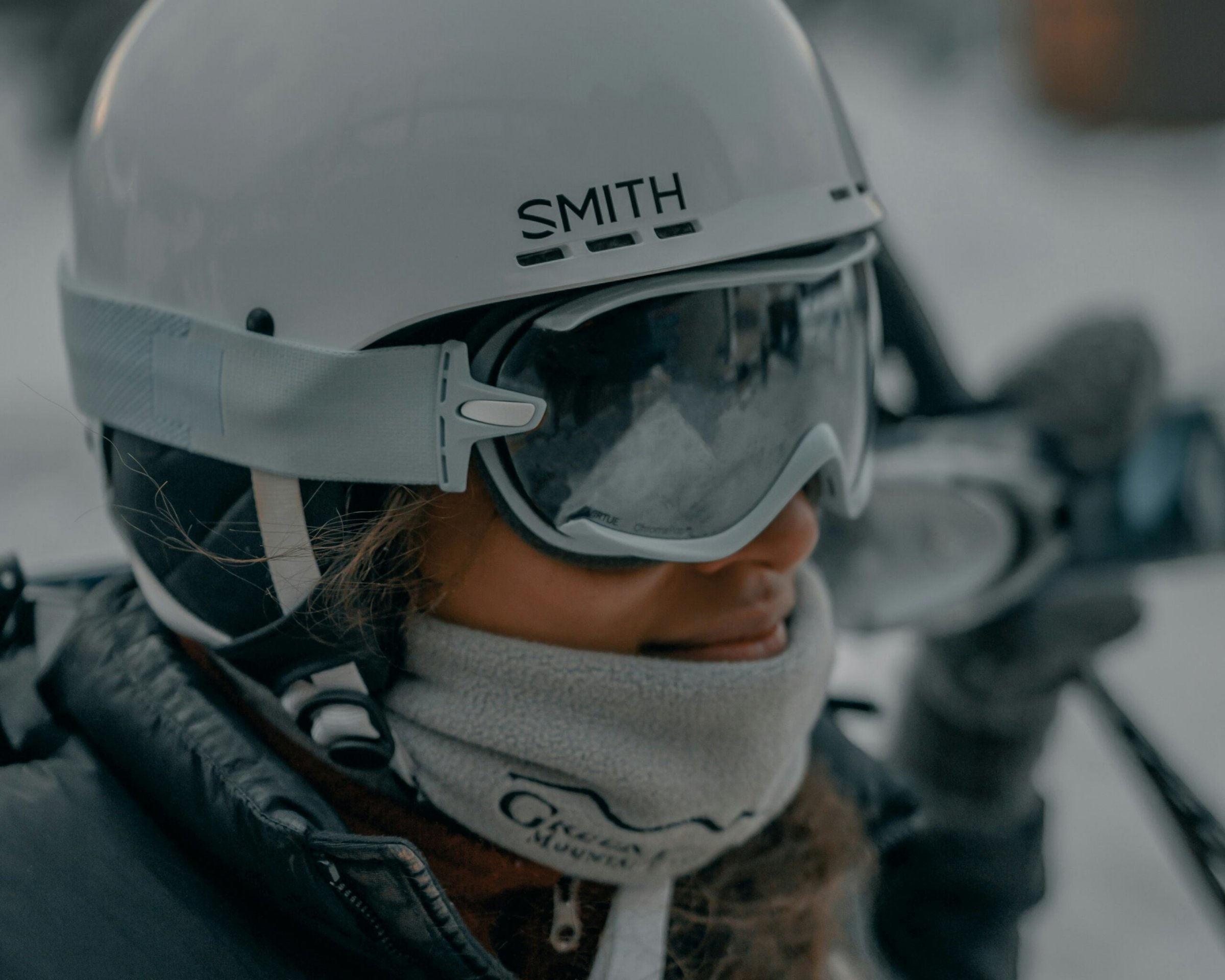
A ski helmet is recommended for all skiers, regardless of ability. The requirements for protection do not change with skill level — only speed, terrain, and environment do.
What matters most is that a helmet is properly certified, fits correctly, and performs reliably in cold conditions. This guide explains what to look for and which standards actually matter. This is especially important when learning to ski safely, where falls are common and unpredictable.
Helmet Safety Certifications (The Non-Negotiables)
A ski helmet should meet at least one recognized snow-sports safety standard. These standards ensure the helmet performs in cold temperatures and during impacts typical of skiing and snowboarding.
ASTM F2040 (USA, Canada, International Standard)
- What it is: The main ski & snowboard helmet safety standard
- Where used: USA, Canada, internationally
- What it means: Helmet is tested for cold temperatures, impacts common in skiing, and repeated hits
If a helmet has ASTM F2040, it’s suitable for skiing.
CE EN 1077 (European Standard)
- What it is: European ski helmet certification
- Two classes:
- Class B – Most common (lighter, softer ear coverage)
- Class A – More coverage, slightly heavier
Both classes meet safety requirements. The difference is coverage, not safety quality.
UKCA / EN 1077 (UK Standard)
UKCA = the label saying those rules were followed
UK equivalent to CE certification
EN 1077 = the rules and tests
Example helmets that meet these standards:
If you’re looking for helmets that meet ASTM F2040 / EN 1077 and are widely used by recreational skiers, these are solid reference options:
- Smith Method Helmet (ASTM F2040 / EN 1077, optional MIPS)
- Giro Ledge MIPS Helmet (ASTM F2040 / CE certified)
(Links open to current pricing and availability.)
What is MIPS ?
MIPS (Multi-directional Impact Protection System) is a low-friction slip layer built inside some helmets, positioned between the comfort padding and the EPS liner.
Its purpose is to:
- Reduce rotational acceleration during angled impacts
- Lower strain on the brain in real-world crash scenarios
MIPS is not mandatory, but it provides additional protection beyond traditional foam-only designs.
Many modern helmets now include MIPS. If you’re comparing models, here are a few certified helmets that incorporate MIPS:
What is EPS?
EPS (Expanded Polystyrene) is the energy-absorbing foam inside a helmet. Quality varies significantly.
| Feature | Low-quality EPS | High-quality EPS |
|---|---|---|
| Bead uniformity | Poor | Consistent |
| Fusion strength | Weak | Strong |
| Density zones | Single | Multi-density |
| Cold performance | Brittle | Stable |
| Crush behavior | Sudden | Progressive |
| Concussion risk | Higher | Lower |
Higher-quality EPS manages energy more gradually and performs more consistently in cold environments.
Fit and Compatibility
A helmet must fit correctly to function as designed.
- It should sit level on the head
- No pressure points
- Minimal movement when shaken
- Compatible with your goggles
Poor fit reduces protection regardless of certification.
Goggles and Helmet Integration
Modern helmets are designed to work with most ski goggles. If you wear glasses, look for OTG (Over-The-Glasses) goggles, which provide extra internal space without compromising seal or vision.
Key features to look for:
- UV400 protection
- Dual-lens construction (reduces fogging)
- Proper helmet-goggle interface
For more information about choosing the right goggles, see our guide here.
Final Thoughts
Choosing the right ski helmet is not about skill level — it’s about standards, construction, and fit.
If a helmet is certified, fits correctly, and is comfortable enough to wear all day, it is doing its job.
Everything else is preference.
For more information on skiing safely and building skills progressively, see our complete guide to learning to ski.
Some links on this page are affiliate links. If you make a purchase, we may earn a small commission at no extra cost to you.