February 8, 2026
Overview of Furano ski resort ski resort including lifts, pistes, elevation, terrain breakdown, and on-mountain layout. Explore resort stats, trail difficulty, and key information for planning your ski trip.
Furano is one of those Japanese ski resorts that sneaks up on you. It does not shout as loudly as Niseko or Hakuba, yet after a few days here you realise you are skiing somewhere genuinely special. Every time I come back, I am reminded why Furano has such a loyal following. It is not flashy, but it is beautiful, efficient, and blessed with consistently good snow.
What makes Furano different is the balance. The terrain is interesting without being overwhelming, the town feels relaxed rather than chaotic, and the snow quality is often excellent. If you want a Japanese ski trip that feels calm, scenic, and still seriously good for skiing, Furano deserves a spot high on your list.
The first thing you notice about Furano is the landscape. The resort sits in central Hokkaido, surrounded by rolling hills, wide valleys, and long, open views. On clear days you can see far across the snow covered countryside, which is a refreshing change from some more enclosed mountain resorts.
The ski base itself is tidy and practical rather than glamorous. There is no sprawling, American style resort village, which I actually appreciate. Everything feels manageable. You can get your lift pass, rent equipment, grab a coffee, and be on snow without the stress that sometimes comes with bigger resorts.
Furano benefits from Hokkaido’s legendary snowfall. Storms roll in from the Sea of Japan and dump light, dry powder across the region. While it might not always match Niseko for sheer volume, the snow in Furano is typically cold, consistent, and great to ski on.
What I like most is how well the snow holds up throughout the day. Even after a busy morning, many runs still feel smooth and enjoyable. On powder days, Furano can be fantastic, especially in the trees and less trafficked areas.
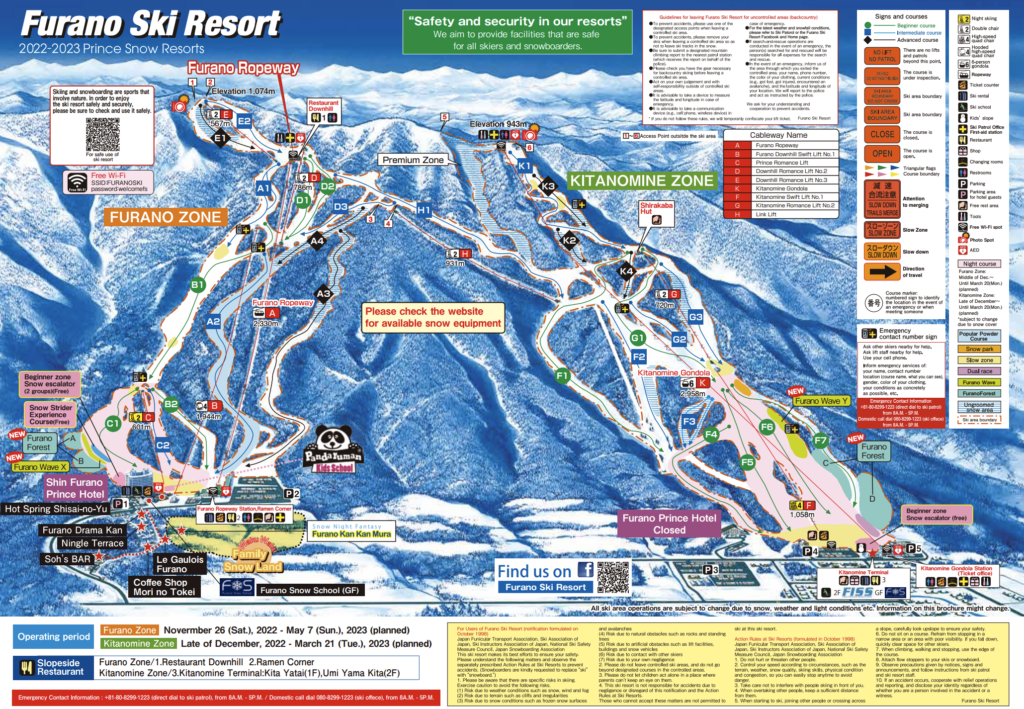
Furano has a surprising amount of variety for a resort of its size. The mountain is split into two main zones, Furano Zone and Kitanomine Zone, which are connected by lifts and groomed runs.
Beginners have plenty of gentle slopes near the base areas, making it a comfortable place to learn. Intermediate skiers will find long, flowing runs that let you build rhythm and confidence. Advanced skiers can hunt for steeper sections, off piste terrain, and tree skiing when conditions allow.
What I really enjoy is that you can spend an entire day exploring without feeling boxed into one type of skiing. One run might be wide and cruisy, the next might weave through birch trees, and the next might drop into a slightly steeper pitch.
These two areas give Furano its character. Furano Zone tends to feel more spacious and open, with longer runs and excellent views. It is where I usually start my day if conditions are good.
Kitanomine Zone feels a bit more technical, with tighter lines, fun tree areas, and a slightly different vibe. It is also where many of the hotels are located, which makes it convenient if you are staying nearby.
Switching between the two zones keeps things interesting. Some days I focus on Furano Zone for big turns and scenery, while other days I spend more time exploring Kitanomine.
Furano’s lift system is modern and efficient. You rarely wait long, even in peak season, and the layout makes sense once you have skied there for a few hours.
The resort has a mix of gondolas, chairlifts, and surface lifts, which helps spread skiers across the mountain. I find it easy to move between runs without constantly checking a map, which is always a good sign of smart resort design.
One of Furano’s hidden strengths is its tree skiing. When conditions are right, the birch forests around the resort offer playful lines and soft snow that feels magical.
It is not as wild or extensive as some Hokkaido backcountry areas, but for in bounds skiing it is a lot of fun. You need to be mindful of safety and resort rules, but if you enjoy weaving through trees, Furano will keep you entertained.
Compared to more famous Hokkaido resorts, Furano feels calm. You will still see visitors, especially during holidays, but it rarely feels chaotic.
The crowd is a mix of Japanese skiers, international visitors, and families. There is a friendly, laid back atmosphere that makes the whole experience more enjoyable. I never feel rushed or stressed here, which is something I value on a ski trip.
Accommodation in Furano is spread across two main areas, the Furano Zone base and Kitanomine. If you want convenience and ski in ski out style access, Kitanomine is usually the better choice.
The hotels here range from simple lodges to more comfortable resorts. Many offer onsen baths, which are a highlight after a long day on the mountain. Soaking in hot water while looking out at snow is one of the best parts of skiing in Japan.
If you prefer a quieter, more local feel, staying in Furano town itself can also be a good option. You will need to take a short bus or drive to the slopes, but you gain access to more restaurants and a slightly different experience.
Furano is not a wild nightlife destination, but it makes up for that with quality food and cosy places to relax. On the mountain, you will find decent cafeterias serving Japanese favourites like ramen, curry, and rice bowls.
In town, there are excellent bakeries, local restaurants, and casual izakaya style bars. Furano is also famous for its dairy products, especially cheese and ice cream, which are worth trying if you have the chance.
Après ski is more low key here than in Niseko, but that is part of the charm. I prefer a quiet beer and good food over crowded bars, and Furano delivers on that front.
While Furano is best known for winter, the area transforms beautifully in summer. The lavender fields, rolling green hills, and hiking trails make it a popular destination beyond ski season.
This gives the resort a different energy compared to purely winter focused towns. There is a sense that Furano is a year round community rather than just a ski bubble.
Reaching Furano is fairly straightforward from Sapporo. Many visitors fly into New Chitose Airport and then take a train or bus to Furano. The journey takes a few hours, but the scenery along the way is lovely.
Some people choose to rent a car, which makes exploring the region easier. Others rely on public transport, which is reliable and well organised. Either way, getting to Furano is part of the adventure rather than a hassle.
Furano suits skiers who value quality snow, relaxed vibes, and a well balanced mountain. It is ideal for families, intermediate skiers, and anyone who wants a more peaceful Japanese ski experience.
If you are chasing party scenes and nonstop nightlife, you might prefer Niseko. But if you want great skiing without the crowds, Furano is an excellent choice.
Every time I leave Furano, I feel like I have had a proper ski holiday. The combination of good snow, interesting terrain, friendly atmosphere, and beautiful surroundings makes it hard to beat.
It is not trying to be the biggest or flashiest resort in Japan. Instead, it focuses on doing the basics really well, and that is exactly why it works.
Furano may not always be the first resort people think of when planning a Japan ski trip, but it should be. It offers everything most skiers actually want, reliable snow, enjoyable terrain, manageable crowds, and a welcoming atmosphere.
If you are looking for a place that feels authentically Japanese, visually stunning, and genuinely fun to ski, Furano deserves serious consideration. I always leave wanting to return, and that is the best endorsement I can give any ski resort.
Check this Furano Ski Resort review out:
Check out the ski map here:

Sknowed.com tracks snowfall, maps ski resorts, and helps you plan trips with live forecasts and alerts.
Sknowed for iPhone is coming for the 2026/27 northern winter. Record your ski day, currently free, and it syncs with the website.